Ontario HST Rebates for ADUs and Garden Suites
Ontario HST Rebates, ADU Housing Incentives, Garden Suites, Granny Suites
Ontario HST New Housing Rebates for ADUs, ARUs, Garden Suites, and Granny Suites
Thinking about adding a garden suite, basement apartment, or backyard “granny suite” in Ontario? The latest Ontario HST Rebates and ADU housing incentives can put tens of thousands of dollars back in your pocket—if you understand the rules, timelines, and how new vs legacy rebates work. This guide breaks it down in plain language and shows you when it makes sense to book a free consultation appointment before you build.
Why ADUs, ARUs, Garden Suites, and Granny Suites Matter for HST
Across Ontario, homeowners are increasingly adding Accessory Dwelling Units (ADUs), also called Additional Residential Units (ARUs), garden suites, laneway houses, and granny suites. Provincial rules under the More Homes Built Faster Act (Bill 23) now allow up to three units on many lots as-of-right: the main house, an internal suite, and a detached garden suite. That opens the door to rental income, multi‑generational living, and—importantly—valuable New Housing Rebates on the HST you pay to build.
When you construct a brand‑new ADU or substantially renovate space into a self‑contained unit, you may qualify to recover part—or in some cases, effectively all—of the HST. Understanding how these Granny Suite Tax Benefits work can significantly reduce your net construction cost and improve your long‑term return on investment.
The Basics: Ontario HST New Housing Rebates in 2026
There are two layers to the HST on new housing in Ontario: federal (5%) and provincial (8%). The Ontario HST Rebates system lets you recover part of each portion when you build or buy a qualifying new home or rental unit, including certain ADUs and garden suites.
Federal New Housing Rebate: Recovers some or all of the 5% federal part. For owner‑occupied homes, this traditionally phases out between $350,000 and $450,000 of fair market value (FMV).
Ontario New Housing Rebate (legacy rule): Recovers up to $24,000 of the 8% provincial portion, regardless of the home’s value, as long as other criteria are met.
For years, this “legacy” structure was the norm. But beginning in 2026, Ontario introduced a powerful temporary expanded HST rebate that can dramatically increase the benefit for qualifying new builds, including some ADUs and rental garden suites.
New vs Legacy Rebates: What Changed in 2026?
Under the 2026 Ontario Budget, the province—working with the federal government—introduced a temporary expanded New Housing Rebate that, in many cases, effectively removes the full 13% HST on qualifying new homes. While much of the media coverage focused on single‑family houses and condos, these rules also matter for ADU housing incentives, especially if your new unit will be used as a long‑term rental.
For homes up to $1 million–$1.5 million, buyers can receive a combined rebate of up to $130,000, essentially offsetting the whole 13% HST.
Between $1.5 million and $1.85 million, the enhanced rebate gradually shrinks from $130,000 back down to the standard $24,000 provincial maximum.
Above $1.85 million, you are back to the legacy Ontario cap of $24,000.
The key difference between the new vs legacy rebates is the scale: the legacy program tops out at $24,000 on the provincial side, while the new temporary regime can deliver up to $130,000 combined federal and provincial relief. For larger projects or multi‑unit builds that include ADUs, ARUs, and granny suites, that gap can be game‑changing.
Critical Time Frames and the 2‑Year Timeline You Need to Watch
To access the temporary expanded Ontario HST Rebates, timing is everything. There are several layers of time frames to keep straight:
Agreement of purchase and sale window: For the enhanced rebate, your agreement must be signed between April 1, 2026 and March 31, 2027. For owner‑builders of ADUs and garden suites, this often translates into when you enter into a construction contract or substantially commit to the build.
Construction start and completion deadlines: For primary‑residence projects, construction must start by December 31, 2028 and be substantially complete by December 31, 2031. For long‑term rental projects (which many ADUs and granny suites are), the completion deadline is December 31, 2029.
On top of this, there is a practical 2‑year timeline that many homeowners face: the period from initial design and permit applications through to final inspection and occupancy. Municipal ADU incentive programs in cities like Barrie, Whitby, Lakeshore, and others often require you to:
Apply for building permits by the end of 2026, and
Achieve final inspection, registration, or occupancy within 12–24 months to keep your local grant or permit‑fee rebate.
💡 Pro Tip: Because provincial HST rules and municipal ADU incentives each have their own deadlines, it’s wise to map out your full 2‑year project timeline before you break ground—and review it with a professional during a consultation appointment.
How ADUs, Garden Suites, and Granny Suites Qualify for New Housing Rebates
Not every secondary unit automatically qualifies for New Housing Rebates. To access ADU housing incentives through the HST system, your project generally needs to meet criteria such as:
The unit is a self‑contained dwelling with its own kitchen, bathroom, and sleeping area (e.g., a detached garden suite or fully separated basement apartment).
It is intended as a primary place of residence (for you or a close family member) or as a long‑term rental, not a short‑term Airbnb‑style rental.
The construction is new or a substantial renovation, not just cosmetic updates.
For many homeowners, the most attractive scenario is building a detached garden suite or backyard granny suite that qualifies as a long‑term rental. In that case, you may be able to:
Recover a portion of the HST under the rental rebate rules, and
Benefit from municipal grants, permit‑fee rebates, and development‑charge exemptions that specifically target ADUs and ARUs.
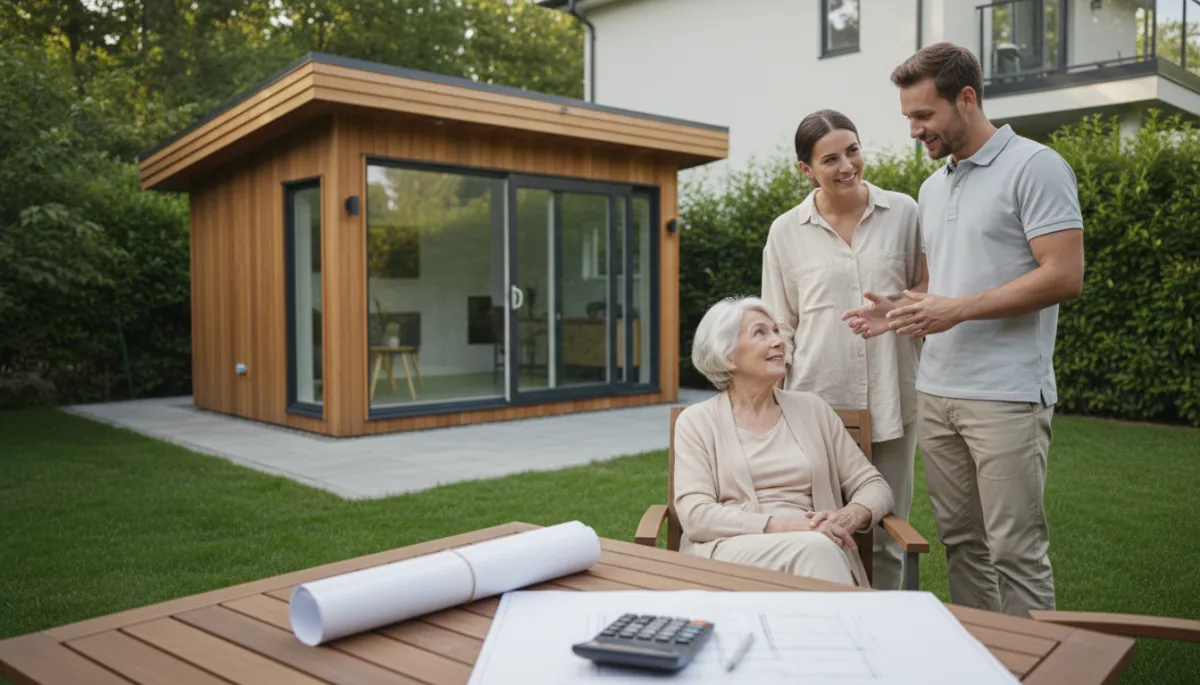
Combining HST rebates and local ADU incentives can significantly lower net granny suite costs.
Granny Suite Tax Benefits Beyond HST
While HST is the headline incentive, there are other granny suite tax benefits that often get overlooked:
If your granny suite is part of your principal residence and used by family, you may benefit from the principal residence exemption on capital gains when you sell (subject to usage and CRA rules).
If you rent the unit, you must report rental income, but you can deduct related expenses—interest, utilities, repairs, and a portion of property taxes—reducing your net taxable income.
Certain energy‑efficient upgrades or accessibility renovations may qualify for separate federal or provincial credits or rebates, especially if the space is designed for an aging parent.
These tax angles are highly fact‑specific. A brief consultation appointment with a professional can help you structure your project to maximize both HST rebates and ongoing income‑tax benefits.
How Much Could You Get Back? Sample Rebate Amounts
Exact amounts depend on your construction cost, fair market value, and whether you fall under the legacy or new temporary rules. But to illustrate:
A $300,000 detached garden suite used as a long‑term rental might generate a combined federal and provincial HST rebate in the tens of thousands of dollars, especially under the expanded 2026–2027 regime.
A larger multi‑unit project that includes a main house plus a legal ARU and a detached granny suite could potentially reach toward the $130,000 maximum rebate, if the overall value and timing align with the new rules.
Because the calculation blends federal and provincial formulas, purchase or construction contracts, and intended use (owner‑occupied vs rental), it’s easy to leave money on the table. That’s why many homeowners choose to have their scenario modeled during a free consultation appointment before finalizing plans.
Why a Consultation Appointment Is Your Best First Step
Between provincial HST rules, federal coordination, municipal ADU grants, and tight time frames, the landscape of Ontario HST Rebates for ADUs, ARUs, garden suites, and granny suites is more complex—but also more rewarding—than ever. A short, no‑obligation consultation appointment can help you:
Confirm whether your planned unit qualifies as an ADU/ARU for rebate purposes and local zoning.
Map your project against the April 1, 2026–March 31, 2027 agreement window and municipal deadlines, so you don’t miss the enhanced rebate period or local incentives.
Estimate your potential New Housing Rebates, including whether you’re better off under the new temporary rules or the legacy structure.
Understand how your granny suite or garden suite will affect rental income, capital gains, and long‑term tax planning.
If you are serious about building an ADU, ARU, garden suite, or granny suite in the next two years, the smartest move you can make today is to book a free consultation appointment. You will walk away with a clearer timeline, a customized rebate estimate, and a strategy to capture every dollar of ADU housing incentives you are entitled to—before the temporary programs expire.
Regulations and programs continue to evolve, and the difference between guessing and getting professional guidance can easily amount to tens of thousands of dollars. Before you pour a foundation or sign a construction contract, take an hour to understand your options. Your future self—and your future rental income—will thank you.