Maximize Savings with HST Rebates & Tax Credits
HST Rebates, Renovation Tax Credits, Home Improvement Savings
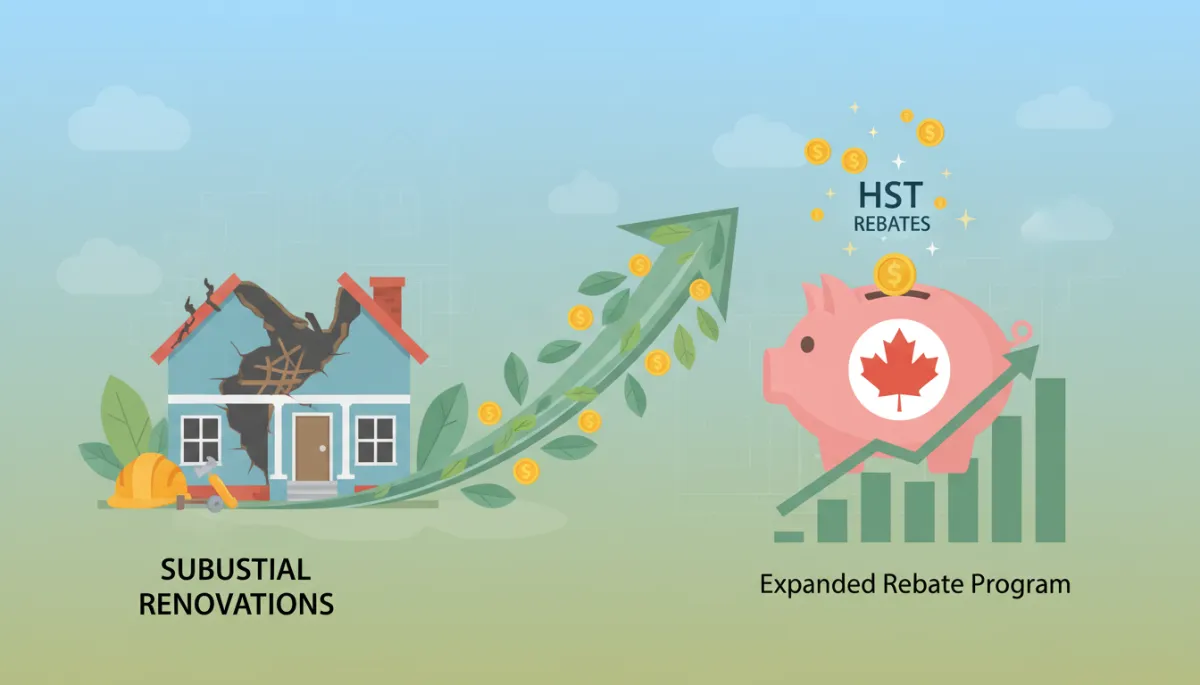
Substantial Renovations HST Rebates: How Canada’s Expanded Programs Can Supercharge Your Home Improvement Savings
Planning a major home overhaul in the next few years? Thanks to new and expanded HST rebates and renovation tax credits, substantial renovations can now deliver serious tax relief—especially for Ontario homeowners and first-time buyers across Canada.
What Counts as a “Substantial Renovation” for HST Rebates?
Not every kitchen facelift or bathroom refresh will unlock HST rebates. For federal and most provincial programs, including Ontario’s expanded rebate program, you generally need to complete a substantial renovation. The Canada Revenue Agency (CRA) defines this as work where at least 90% of the interior of the home is removed and replaced, excluding structural elements such as the foundation, exterior walls, roof, floors, and staircases (canada.ca).
In practical terms, this usually means gutting the interior: removing most walls and finishes, replacing plumbing and electrical, installing new kitchens and bathrooms, and rebuilding living spaces. Cosmetic projects—new counters, flooring in a few rooms, or a finished basement—almost never meet the “90%” threshold on their own.
💡 Pro Tip: If your project is close to the line, keep detailed floor plans, before-and-after photos, and contractor scopes of work to help demonstrate that you truly met the substantial renovations test.
Federal HST Rebates for Substantial Renovations: A Boost for First-Time Buyers
At the federal level, the newest tool in your home improvement savings toolkit is the First-Time Home Buyers (FTHB) GST/HST Rebate, introduced under Bill C‑4 and effective for agreements from March 20, 2025 onward (canada.ca).
This rebate applies not only to brand-new homes but also to substantially renovated homes used as a primary residence. Eligible first-time buyers can recover up to 100% of the federal GST/HST portion on homes up to $1 million, with the rebate gradually phasing out between $1 million and $1.5 million. The maximum federal refund can reach about $50,000 for qualifying purchases (supplybuild.ca).
If you’re an owner‑builder undertaking a substantial renovation, or you’re buying a home that a builder has gutted and rebuilt, you may qualify for this federal HST rebate as long as you are a first-time buyer and the home is your main place of residence. Applications usually must be filed within two years of substantial completion or the date you take ownership, using CRA forms such as GST190 or GST191.
Ontario’s Expanded Rebate Program: Up to 13% HST Back on Substantial Renovations
Ontario has gone a step further with a one‑year Expanded Rebate Program that can dramatically reduce the cost of new builds and substantial renovations. Announced in the 2026 Ontario budget, this temporary expansion effectively removes up to the full 13% HST on qualifying homes for agreements signed between April 1, 2026 and March 31, 2027 (news.ontario.ca).
The program is notable for two reasons:
It is not limited to first-time buyers. Move‑up buyers, investors, and landlords of long‑term rentals can all potentially benefit, as long as the home is new or substantially renovated and used as a primary residence for the buyer or a close relative, or as a long‑term rental property (firsthomeontario.ca).
It offers up to $130,000 in combined HST relief on homes up to $1 million, with a sliding scale up to about $1.85 million and a minimum rebate of roughly $24,000 for higher‑priced properties.
For substantial renovations, the same 90% interior‑gut test applies. Construction must begin by December 31, 2028, with completion deadlines extending to 2029 or 2031 depending on whether the project is owner‑built or purchased from a builder (budget.ontario.ca).
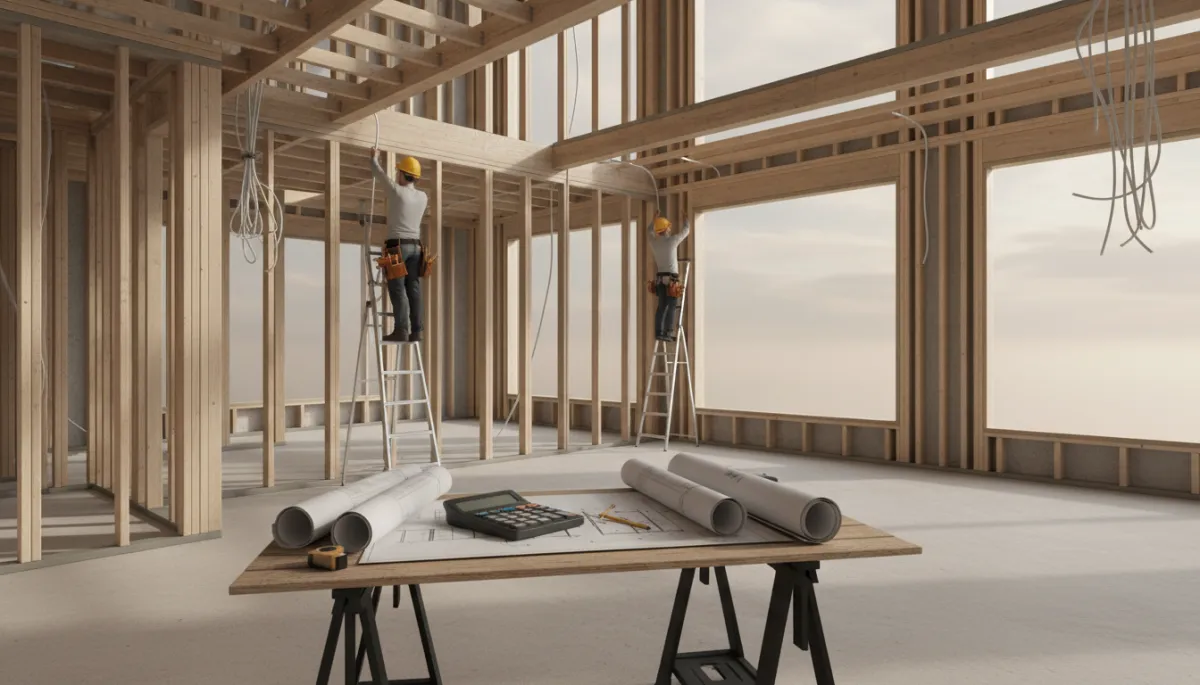
Stacking HST rebates and renovation tax credits can trim six figures off major gut jobs.
Beyond HST Rebates: Renovation Tax Credits That Add Extra Savings
While HST rebates focus on the tax embedded in the purchase or construction cost of a substantially renovated home, several renovation tax credits can further increase your home improvement savings, even if your project doesn’t reach the 90% threshold.
Home Accessibility Tax Credit (HATC)
The federal Home Accessibility Tax Credit is a non‑refundable credit that lets qualifying seniors (65+) and people eligible for the Disability Tax Credit claim eligible accessibility renovation expenses up to $20,000 per year. At the lowest federal tax rate of 15%, that’s worth up to $3,000 annually (canada.ca).
Eligible work can include ramps, chair lifts, walk‑in tubs, widened doorways, and other modifications that make a home safer or more accessible. Note that you can’t double‑dip by claiming the same expenses under both the HATC and the Medical Expense Tax Credit.
Multigenerational Home Renovation Tax Credit (MHRTC)
If your substantial renovation includes building a secondary suite for an aging parent or an adult child with a disability, the Multigenerational Home Renovation Tax Credit can be a powerful complement. This refundable credit covers 15% of eligible expenses, up to $50,000, for a maximum refund of $7,500 (turbotax.community.intuit.ca).
To qualify, the renovation must create a self‑contained secondary unit with its own entrance, kitchen, bathroom, and sleeping area. Only one claim is allowed per qualifying renovation per individual, although multiple qualifying family members in the same home may sometimes structure separate claims within CRA rules (shajani.ca).
Energy Efficiency Rebates and Loans
Energy‑focused programs can also dovetail nicely with substantial renovations. Federal initiatives such as the Oil‑to‑Heat Pump Affordability Program (up to $10,000 in grants) and the Canada Greener Homes Loan (0% interest, up to $40,000) help offset the cost of high‑efficiency heating, cooling, and insulation upgrades (granthub.ca).
In Ontario, the Home Renovation Savings Program offers up to $7,500 for cold‑climate air‑source heat pumps, $12,000 for geothermal systems, plus rebates for solar, insulation, windows, and more, for projects approved by November 30, 2026 and completed by September 30, 2027 (claimrebate.ca).
📌 Key Takeaway: HST Rebates reduce the tax on your substantial renovation or new home purchase, while renovation tax credits and energy rebates chip away at specific project costs—stacking them can unlock substantial home improvement savings.
How to Maximize Your Home Improvement Savings on a Substantial Renovation
With so many overlapping programs, it pays to plan your substantial renovation with taxes in mind from day one. Here’s a simple roadmap to get the most from HST rebates, renovation tax credits, and other incentives:
Confirm whether your project is truly “substantial.” Work with your contractor to estimate what percentage of the interior will be gutted and rebuilt. If you’re close to the 90% threshold, consider whether expanding the scope slightly could unlock major HST rebates.
Time your agreement and construction dates. In Ontario, ensure your purchase or construction agreement falls between April 1, 2026 and March 31, 2027, and that work starts before the 2028 deadline to access the expanded rebate program.
Clarify whether the builder is assigning the rebate. Many builders in Ontario price homes assuming they will receive and assign HST rebates at closing. If not, you may need to pay the full HST upfront and apply to CRA yourself.
Layer in renovation tax credits. If you’re adding an in‑law suite, making accessibility improvements, or upgrading to a heat pump, map out which expenses can be claimed under the MHRTC, HATC, or provincial energy programs.
Keep meticulous documentation. Save contracts, detailed invoices, permits, architectural drawings, and dated photos. These records are essential if CRA asks you to prove that your renovation was substantial or that specific expenses qualify for a tax credit.
Final Thoughts: Turning a Major Gut Job into a Smart Financial Move
Substantial renovations are disruptive, expensive, and often overwhelming—but in today’s policy environment, they can also be a powerful wealth‑building strategy. Between federal FTHB HST rebates, Ontario’s expanded rebate program, and a suite of renovation tax credits and energy incentives, Canadian homeowners have more options than ever to reduce the real cost of transforming a home.
The key is to treat tax planning as an integral part of your renovation, not an afterthought. Before you sign a construction contract or start demolition, talk with your builder, mortgage broker, and a qualified tax professional about how HST rebates and renovation credits apply to your situation. A few strategic choices around timing, scope, and documentation can translate into tens of thousands—sometimes even over a hundred thousand dollars—in home improvement savings.
Programs and rules do evolve, and some 2026 measures still depend on final federal regulations. Always confirm the latest details on official sites like canada.ca and your provincial government’s pages, or seek tailored advice. With the right information and planning, your substantial renovation can deliver not only a beautiful new space—but also a significantly lighter tax bill.